






"Märchen im Grandhotel" von Paul Abraham im Mainfrankentheater Würzburg - inszeniert von Tristan Braun
"Mitreissend:... mit welcher Inbrunst sich Vero Miller als überkandidelte Königin ins spe und Julian Habermann als ungeschickter, verliebter Kellner in ihr hoffnungsloses Techtelmechtel stürzen. Da wird keine Peinlichkeit ausgelassen, kein Bettvorleger geschont und keine Schmonzette nicht schmachtend geschmettert - es ist zum Hinlegen daneben, aber deshalb umso schöner."
News
Calendar
Works by Delibes, Lehár, J. Strauss, Stolz
Leonor Amaral, Soprano Julian Habermann, Tenor Johannes Klumpp, Conduction and Moderation
Under the direction of Johannes Klumpp, the artistic director of the Heidelberger Sinfoniker, we invite you to welcome the New Year with the Portuguese coloratura soprano Leonor Amaral and the tenor Julian Habermann!
Works by Delibes, Lehár, J. Strauss, Stolz
Leonor Amaral, Soprano Julian Habermann, Tenor Johannes Klumpp, Conduction and Moderation
Under the direction of Johannes Klumpp, the artistic director of the Heidelberger Sinfoniker, we invite you to welcome the New Year with the Portuguese coloratura soprano Leonor Amaral and the tenor Julian Habermann!
Works by Delibes, Lehár, J. Strauss, Stolz
Leonor Amaral, Soprano Julian Habermann, Tenor Johannes Klumpp, Conduction and Moderation
Under the direction of Johannes Klumpp, the artistic director of the Heidelberger Sinfoniker, we invite you to welcome the New Year with the Portuguese coloratura soprano Leonor Amaral and the tenor Julian Habermann!
Works by Delibes, Lehár, J. Strauss, Stolz
Leonor Amaral, Soprano Julian Habermann, Tenor Johannes Klumpp, Conduction and Moderation
Under the direction of Johannes Klumpp, the artistic director of the Heidelberger Sinfoniker, we invite you to welcome the New Year with the Portuguese coloratura soprano Leonor Amaral and the tenor Julian Habermann!
Works by Delibes, Lehár, J. Strauss, Stolz
Leonor Amaral, Soprano Julian Habermann, Tenor Johannes Klumpp, Conduction and Moderation
Under the direction of Johannes Klumpp, the artistic director of the Heidelberger Sinfoniker, we invite you to welcome the New Year with the Portuguese coloratura soprano Leonor Amaral and the tenor Julian Habermann!
Works by Delibes, Lehár, J. Strauss, Stolz
Leonor Amaral, Soprano Julian Habermann, Tenor Johannes Klumpp, Conduction and Moderation
Under the direction of Johannes Klumpp, the artistic director of the Heidelberger Sinfoniker, we invite you to welcome the New Year with the Portuguese coloratura soprano Leonor Amaral and the tenor Julian Habermann!
Programme:
Bach, Johann Sebastian (1685-1750) Mass in B minor, BWV232
Performers:
Belgrade Philharmonic Orchestra
Gabriel Felz, Conductor
Vera Talerko, Soprano
Beth Taylor, Mezzo-sopran
Julian Habermann, Tenor
Simon Robinson, Bass-bariton
Czech Philharmonic Choir of Brno
Choir: Oratorienchor Musikverein Pirmasens e. V.
Conductor: Christoph Haßler
Conductor: Eivind Gullberg Jensen Evangelist: Patrick Grahl Jesus: Arttu Kataja Alto: Maarten Engeltjes Tenor: Julian Habermann Soprano: Marie Luise Werneburg Bass: Henning von Schulman Choir: NNCK Choir: RJK Roder Jongenskoor
Protestant Service with Children's Church
J. S. Bach: "Wer mich liebet, der wird mein Wort halten" BWV 74
Catherina Witting - Soprano
Ida Aldrian - Alto
Julian Habermann - Tenor
Dávid Csizmár - Bass
St. Michaelis Choir
St. Michaelis Orchestra
Jörg Endebrock - Conductor and Organist
- Dvorak - Mass in D major
- Biblical Songs (Arrangement for Chor and Orchestra by Jarmil Burghauser)
- Purcell - Te Deum and Jubilate in D major
Bernhard Zosel - Conductor
Mendelssohn: "Elijah"
Vocal Soloists
Choir and Orchestra of the University of Music and Performing Arts Frankfurt
Conducted by Florian Lohmann
Kloster Eberbach, Basilica, Eltville am Rhein
Protestant Service with Children's Church
J. S. Bach: Magnificat BWV 243
Catherina Witting - Soprano
Joël Vuik - Alto
Julian Habermann - Tenor
Andreas Pruys - Bass
St. Michaelis Choir
St. Michaelis Orchestra
Jörg Endebrock - Conductor and Organist
MONTEVERDI'S "ORFEO" IS REGARDED AS THE BIRTH OF OPERA AND TELLS OF THE POWER OF MUSIC.
MICHAEL HELL BRINGS THE MASTERPIECE BACK TO LIFE,
NATALIA MORO WRAPS IT IN IMAGES OF SAND.
SAND IN THE LAND OF SHADOWS
In 1607, Monteverdi placed the lamentations of Orpheus in the mouth of a divinely singing tenor in Mantua, and his orchestra wielded the full power of tones to conquer death. In Styriarte's "Orfeo," sand symbolizes the realm of shadows, where colors cease to exist. Through moving images, the sand artist Natalia Moro captures the myth on canvas. Enchantingly beautiful baroque voices sing the arias and choruses of Monteverdi's masterpiece. Michael Hell guides his colorful ĀRT HOUSE orchestra as conductor and harpsichordist.
MONTEVERDI'S "ORFEO" IS REGARDED AS THE BIRTH OF OPERA AND TELLS OF THE POWER OF MUSIC.
MICHAEL HELL BRINGS THE MASTERPIECE BACK TO LIFE,
NATALIA MORO WRAPS IT IN IMAGES OF SAND.
SAND IN THE LAND OF SHADOWS
In 1607, Monteverdi placed the lamentations of Orpheus in the mouth of a divinely singing tenor in Mantua, and his orchestra wielded the full power of tones to conquer death. In Styriarte's "Orfeo," sand symbolizes the realm of shadows, where colors cease to exist. Through moving images, the sand artist Natalia Moro captures the myth on canvas. Enchantingly beautiful baroque voices sing the arias and choruses of Monteverdi's masterpiece. Michael Hell guides his colorful ĀRT HOUSE orchestra as conductor and harpsichordist.
- Henry Purcell: Two Fantasias for Strings
- Benjamin Britten: Hymn to St. Cecilia op. 27
- Franz Liszt: Orpheus (Symphonic Poem No. 4, 1854, Organ Version)
- Georg Friedrich Händel: Solomon (Act III)
Lucia Boisserée – Queen of Sheba (Soprano)
Julian Habermann – Zadok, the Priest (Tenor)
Markus Simon – Solomon (Baritone)
Vocal Ensemble St. Lorenz
ensemble KONTRASTE
Matthias Ank – Conductor and Organ
"The Creation" by Joseph Haydn
Samantha Gaul, Soprano
Julian Habermann, Tenor
Johannes Schendel, Bass
Hessian State Youth Choir
Hessian State Youth Symphony Orchestra
Conducted by Axel Pfeiffer
"The Creation" by Joseph Haydn
Samantha Gaul, Soprano
Julian Habermann, Tenor
Johannes Schendel, Bass
Hessian State Youth Choir
Hessian State Youth Symphony Orchestra
Conducted by Axel Pfeiffer
Opening Concert Musikfest Erzgebirge
Wrocław Baroque Orchestra / Soloists Ensemble / Dresden Chamber Choir / Hans-Christoph Rademann
BACH’S COMPASS
In a world full of crises, Bach gives us something to hold on to. Find a path through daily dilemmas in this cantata programme by famous Bach expert John Butt.
„Intimate line-up with maximum expression“
For centuries, Bach’s cantatas have been providing comfort, reflection and calmness. For the opening of this season, John Butt, artistic director of the Dunedin Consort, chose three cantatas with themes that also move today’s listeners. Do you open up to the ‘other’, or do you shy away from the unfamiliar? In the case of injustice, do you want revenge or do you try to forgive? And where do you find trust, hope and faith? Universal questions of life with possible answers set to music by Bach. John Butt leads the ensemble in an intimate line-up with maximum expression.
WORKS
Johann Bernard Bach
Overture-Suite no. 3 in E minor
Johann Sebastian Bach
Cantata Was soll ich aus dir machen, Ephraim?, BWV 89
Cantata Ihr, die ihr euch von Christo nennet, BWV 164
Cantata Ich lasse dich nicht, du segnest mich denn, BWV 157
PERFORMERS
Netherlands Bach Society
John Butt, harpsichord and leader
Carine Tinney, soprano
Alex Potter, alto
Julian Haberman, tenor
Matthew Brook, bass
BACH’S COMPASS
In a world full of crises, Bach gives us something to hold on to. Find a path through daily dilemmas in this cantata programme by famous Bach expert John Butt.
„Intimate line-up with maximum expression“
For centuries, Bach’s cantatas have been providing comfort, reflection and calmness. For the opening of this season, John Butt, artistic director of the Dunedin Consort, chose three cantatas with themes that also move today’s listeners. Do you open up to the ‘other’, or do you shy away from the unfamiliar? In the case of injustice, do you want revenge or do you try to forgive? And where do you find trust, hope and faith? Universal questions of life with possible answers set to music by Bach. John Butt leads the ensemble in an intimate line-up with maximum expression.
WORKS
Johann Bernard Bach
Overture-Suite no. 3 in E minor
Johann Sebastian Bach
Cantata Was soll ich aus dir machen, Ephraim?, BWV 89
Cantata Ihr, die ihr euch von Christo nennet, BWV 164
Cantata Ich lasse dich nicht, du segnest mich denn, BWV 157
PERFORMERS
Netherlands Bach Society
John Butt, harpsichord and leader
Carine Tinney, soprano
Alex Potter, alto
Julian Haberman, tenor
Matthew Brook, bass
BACH’S COMPASS
In a world full of crises, Bach gives us something to hold on to. Find a path through daily dilemmas in this cantata programme by famous Bach expert John Butt.
„Intimate line-up with maximum expression“
For centuries, Bach’s cantatas have been providing comfort, reflection and calmness. For the opening of this season, John Butt, artistic director of the Dunedin Consort, chose three cantatas with themes that also move today’s listeners. Do you open up to the ‘other’, or do you shy away from the unfamiliar? In the case of injustice, do you want revenge or do you try to forgive? And where do you find trust, hope and faith? Universal questions of life with possible answers set to music by Bach. John Butt leads the ensemble in an intimate line-up with maximum expression.
WORKS
Johann Bernard Bach
Overture-Suite no. 3 in E minor
Johann Sebastian Bach
Cantata Was soll ich aus dir machen, Ephraim?, BWV 89
Cantata Ihr, die ihr euch von Christo nennet, BWV 164
Cantata Ich lasse dich nicht, du segnest mich denn, BWV 157
PERFORMERS
Netherlands Bach Society
John Butt, harpsichord and leader
Carine Tinney, soprano
Alex Potter, alto
Julian Haberman, tenor
Matthew Brook, bass
BACH’S COMPASS
In a world full of crises, Bach gives us something to hold on to. Find a path through daily dilemmas in this cantata programme by famous Bach expert John Butt.
„Intimate line-up with maximum expression“
For centuries, Bach’s cantatas have been providing comfort, reflection and calmness. For the opening of this season, John Butt, artistic director of the Dunedin Consort, chose three cantatas with themes that also move today’s listeners. Do you open up to the ‘other’, or do you shy away from the unfamiliar? In the case of injustice, do you want revenge or do you try to forgive? And where do you find trust, hope and faith? Universal questions of life with possible answers set to music by Bach. John Butt leads the ensemble in an intimate line-up with maximum expression.
WORKS
Johann Bernard Bach
Overture-Suite no. 3 in E minor
Johann Sebastian Bach
Cantata Was soll ich aus dir machen, Ephraim?, BWV 89
Cantata Ihr, die ihr euch von Christo nennet, BWV 164
Cantata Ich lasse dich nicht, du segnest mich denn, BWV 157
PERFORMERS
Netherlands Bach Society
John Butt, harpsichord and leader
Carine Tinney, soprano
Alex Potter, alto
Julian Haberman, tenor
Matthew Brook, bass
Wolfgang Amadeus Mozart: "Requiem"
Josef Gabriel Rheinberger: Organ
Concerto in G minor, Op. 177
Eichstätt Cathedral Choir
Georgian Chamber Orchestra Ingolstadt
Organ: Martin Bernreuther
Conductor: Manfred Faig
Musical Direction: Gábor Hontvári
Direction: Tristan Braun
Stage Design: Valentin Mattka
Costume Design: Heike Seidler
Choreography: Mariana Souza
Cast:
Albert - Julian Habermann
Operetta by Paul Abraham:
Hollywood meets the Côte d’Azur. Marylou, daughter of film producer Sam Macintosh, plans to create her own movie, hoping the film’s profits will save Universal Star Picture Ltd. from bankruptcy and herself from an arranged marriage orchestrated by her father. While scanning the gossip column of the New York Times, Marylou stumbles upon the perfect real-life story: Spanish Infanta Isabella, living in exile with her dethroned family at a luxury hotel on the Côte d’Azur. For Isabella, a film offer would be just what she needs to finance her court—if only the setting weren’t so beneath her dignity. As if things couldn’t get more complicated, hotel waiter Albert falls in love with the beautiful Spaniard!
Paul Abraham’s 1934 operetta Märchen im Grand Hôtel ("Fairy Tale in the Grand Hotel") is teeming with typical operetta clichés: class differences, last-minute resolutions of major misunderstandings, all set to dazzling music that not only evokes the operetta bliss of the "Silver Era" but also skillfully brings fashionable dances like the foxtrot and tango, along with new jazz sounds, to the stage. Born in Hungary in 1892, Paul Abraham became one of the most successful composers of his time in the early 1930s with works like Viktoria und ihr Husar, Die Blume von Hawaii, and Ball im Savoy. However, his soaring career was abruptly halted by the Nazi terror. Abraham fled via Paris to New York, where he was unable to regain his artistic footing. Soon after, he descended into a state of mental decline from which he never recovered, remaining in this condition until his death in 1960.
Musical Direction: Gábor Hontvári
Direction: Tristan Braun
Stage Design: Valentin Mattka
Costume Design: Heike Seidler
Choreography: Mariana Souza
Cast:
Albert - Julian Habermann
Operetta by Paul Abraham:
Hollywood meets the Côte d’Azur. Marylou, daughter of film producer Sam Macintosh, plans to create her own movie, hoping the film’s profits will save Universal Star Picture Ltd. from bankruptcy and herself from an arranged marriage orchestrated by her father. While scanning the gossip column of the New York Times, Marylou stumbles upon the perfect real-life story: Spanish Infanta Isabella, living in exile with her dethroned family at a luxury hotel on the Côte d’Azur. For Isabella, a film offer would be just what she needs to finance her court—if only the setting weren’t so beneath her dignity. As if things couldn’t get more complicated, hotel waiter Albert falls in love with the beautiful Spaniard!
Paul Abraham’s 1934 operetta Märchen im Grand Hôtel ("Fairy Tale in the Grand Hotel") is teeming with typical operetta clichés: class differences, last-minute resolutions of major misunderstandings, all set to dazzling music that not only evokes the operetta bliss of the "Silver Era" but also skillfully brings fashionable dances like the foxtrot and tango, along with new jazz sounds, to the stage. Born in Hungary in 1892, Paul Abraham became one of the most successful composers of his time in the early 1930s with works like Viktoria und ihr Husar, Die Blume von Hawaii, and Ball im Savoy. However, his soaring career was abruptly halted by the Nazi terror. Abraham fled via Paris to New York, where he was unable to regain his artistic footing. Soon after, he descended into a state of mental decline from which he never recovered, remaining in this condition until his death in 1960.
Musical Direction: Gábor Hontvári
Direction: Tristan Braun
Stage Design: Valentin Mattka
Costume Design: Heike Seidler
Choreography: Mariana Souza
Cast:
Albert - Julian Habermann
Operetta by Paul Abraham:
Hollywood meets the Côte d’Azur. Marylou, daughter of film producer Sam Macintosh, plans to create her own movie, hoping the film’s profits will save Universal Star Picture Ltd. from bankruptcy and herself from an arranged marriage orchestrated by her father. While scanning the gossip column of the New York Times, Marylou stumbles upon the perfect real-life story: Spanish Infanta Isabella, living in exile with her dethroned family at a luxury hotel on the Côte d’Azur. For Isabella, a film offer would be just what she needs to finance her court—if only the setting weren’t so beneath her dignity. As if things couldn’t get more complicated, hotel waiter Albert falls in love with the beautiful Spaniard!
Paul Abraham’s 1934 operetta Märchen im Grand Hôtel ("Fairy Tale in the Grand Hotel") is teeming with typical operetta clichés: class differences, last-minute resolutions of major misunderstandings, all set to dazzling music that not only evokes the operetta bliss of the "Silver Era" but also skillfully brings fashionable dances like the foxtrot and tango, along with new jazz sounds, to the stage. Born in Hungary in 1892, Paul Abraham became one of the most successful composers of his time in the early 1930s with works like Viktoria und ihr Husar, Die Blume von Hawaii, and Ball im Savoy. However, his soaring career was abruptly halted by the Nazi terror. Abraham fled via Paris to New York, where he was unable to regain his artistic footing. Soon after, he descended into a state of mental decline from which he never recovered, remaining in this condition until his death in 1960.
Musical Direction: Gábor Hontvári
Direction: Tristan Braun
Stage Design: Valentin Mattka
Costume Design: Heike Seidler
Choreography: Mariana Souza
Cast:
Albert - Julian Habermann
Operetta by Paul Abraham:
Hollywood meets the Côte d’Azur. Marylou, daughter of film producer Sam Macintosh, plans to create her own movie, hoping the film’s profits will save Universal Star Picture Ltd. from bankruptcy and herself from an arranged marriage orchestrated by her father. While scanning the gossip column of the New York Times, Marylou stumbles upon the perfect real-life story: Spanish Infanta Isabella, living in exile with her dethroned family at a luxury hotel on the Côte d’Azur. For Isabella, a film offer would be just what she needs to finance her court—if only the setting weren’t so beneath her dignity. As if things couldn’t get more complicated, hotel waiter Albert falls in love with the beautiful Spaniard!
Paul Abraham’s 1934 operetta Märchen im Grand Hôtel ("Fairy Tale in the Grand Hotel") is teeming with typical operetta clichés: class differences, last-minute resolutions of major misunderstandings, all set to dazzling music that not only evokes the operetta bliss of the "Silver Era" but also skillfully brings fashionable dances like the foxtrot and tango, along with new jazz sounds, to the stage. Born in Hungary in 1892, Paul Abraham became one of the most successful composers of his time in the early 1930s with works like Viktoria und ihr Husar, Die Blume von Hawaii, and Ball im Savoy. However, his soaring career was abruptly halted by the Nazi terror. Abraham fled via Paris to New York, where he was unable to regain his artistic footing. Soon after, he descended into a state of mental decline from which he never recovered, remaining in this condition until his death in 1960.
Musical Direction: Gábor Hontvári
Direction: Tristan Braun
Stage Design: Valentin Mattka
Costume Design: Heike Seidler
Choreography: Mariana Souza
Cast:
Albert - Julian Habermann
Operetta by Paul Abraham:
Hollywood meets the Côte d’Azur. Marylou, daughter of film producer Sam Macintosh, plans to create her own movie, hoping the film’s profits will save Universal Star Picture Ltd. from bankruptcy and herself from an arranged marriage orchestrated by her father. While scanning the gossip column of the New York Times, Marylou stumbles upon the perfect real-life story: Spanish Infanta Isabella, living in exile with her dethroned family at a luxury hotel on the Côte d’Azur. For Isabella, a film offer would be just what she needs to finance her court—if only the setting weren’t so beneath her dignity. As if things couldn’t get more complicated, hotel waiter Albert falls in love with the beautiful Spaniard!
Paul Abraham’s 1934 operetta Märchen im Grand Hôtel ("Fairy Tale in the Grand Hotel") is teeming with typical operetta clichés: class differences, last-minute resolutions of major misunderstandings, all set to dazzling music that not only evokes the operetta bliss of the "Silver Era" but also skillfully brings fashionable dances like the foxtrot and tango, along with new jazz sounds, to the stage. Born in Hungary in 1892, Paul Abraham became one of the most successful composers of his time in the early 1930s with works like Viktoria und ihr Husar, Die Blume von Hawaii, and Ball im Savoy. However, his soaring career was abruptly halted by the Nazi terror. Abraham fled via Paris to New York, where he was unable to regain his artistic footing. Soon after, he descended into a state of mental decline from which he never recovered, remaining in this condition until his death in 1960.
Musical Direction: Gábor Hontvári
Direction: Tristan Braun
Stage Design: Valentin Mattka
Costume Design: Heike Seidler
Choreography: Mariana Souza
Cast:
Albert - Julian Habermann
Operetta by Paul Abraham:
Hollywood meets the Côte d’Azur. Marylou, daughter of film producer Sam Macintosh, plans to create her own movie, hoping the film’s profits will save Universal Star Picture Ltd. from bankruptcy and herself from an arranged marriage orchestrated by her father. While scanning the gossip column of the New York Times, Marylou stumbles upon the perfect real-life story: Spanish Infanta Isabella, living in exile with her dethroned family at a luxury hotel on the Côte d’Azur. For Isabella, a film offer would be just what she needs to finance her court—if only the setting weren’t so beneath her dignity. As if things couldn’t get more complicated, hotel waiter Albert falls in love with the beautiful Spaniard!
Paul Abraham’s 1934 operetta Märchen im Grand Hôtel ("Fairy Tale in the Grand Hotel") is teeming with typical operetta clichés: class differences, last-minute resolutions of major misunderstandings, all set to dazzling music that not only evokes the operetta bliss of the "Silver Era" but also skillfully brings fashionable dances like the foxtrot and tango, along with new jazz sounds, to the stage. Born in Hungary in 1892, Paul Abraham became one of the most successful composers of his time in the early 1930s with works like Viktoria und ihr Husar, Die Blume von Hawaii, and Ball im Savoy. However, his soaring career was abruptly halted by the Nazi terror. Abraham fled via Paris to New York, where he was unable to regain his artistic footing. Soon after, he descended into a state of mental decline from which he never recovered, remaining in this condition until his death in 1960.
Musical Direction: Gábor Hontvári
Direction: Tristan Braun
Stage Design: Valentin Mattka
Costume Design: Heike Seidler
Choreography: Mariana Souza
Cast:
Albert - Julian Habermann
Operetta by Paul Abraham:
Hollywood meets the Côte d’Azur. Marylou, daughter of film producer Sam Macintosh, plans to create her own movie, hoping the film’s profits will save Universal Star Picture Ltd. from bankruptcy and herself from an arranged marriage orchestrated by her father. While scanning the gossip column of the New York Times, Marylou stumbles upon the perfect real-life story: Spanish Infanta Isabella, living in exile with her dethroned family at a luxury hotel on the Côte d’Azur. For Isabella, a film offer would be just what she needs to finance her court—if only the setting weren’t so beneath her dignity. As if things couldn’t get more complicated, hotel waiter Albert falls in love with the beautiful Spaniard!
Paul Abraham’s 1934 operetta Märchen im Grand Hôtel ("Fairy Tale in the Grand Hotel") is teeming with typical operetta clichés: class differences, last-minute resolutions of major misunderstandings, all set to dazzling music that not only evokes the operetta bliss of the "Silver Era" but also skillfully brings fashionable dances like the foxtrot and tango, along with new jazz sounds, to the stage. Born in Hungary in 1892, Paul Abraham became one of the most successful composers of his time in the early 1930s with works like Viktoria und ihr Husar, Die Blume von Hawaii, and Ball im Savoy. However, his soaring career was abruptly halted by the Nazi terror. Abraham fled via Paris to New York, where he was unable to regain his artistic footing. Soon after, he descended into a state of mental decline from which he never recovered, remaining in this condition until his death in 1960.
Musical Direction: Gábor Hontvári
Direction: Tristan Braun
Stage Design: Valentin Mattka
Costume Design: Heike Seidler
Choreography: Mariana Souza
Cast:
Albert - Julian Habermann
Operetta by Paul Abraham:
Hollywood meets the Côte d’Azur. Marylou, daughter of film producer Sam Macintosh, plans to create her own movie, hoping the film’s profits will save Universal Star Picture Ltd. from bankruptcy and herself from an arranged marriage orchestrated by her father. While scanning the gossip column of the New York Times, Marylou stumbles upon the perfect real-life story: Spanish Infanta Isabella, living in exile with her dethroned family at a luxury hotel on the Côte d’Azur. For Isabella, a film offer would be just what she needs to finance her court—if only the setting weren’t so beneath her dignity. As if things couldn’t get more complicated, hotel waiter Albert falls in love with the beautiful Spaniard!
Paul Abraham’s 1934 operetta Märchen im Grand Hôtel ("Fairy Tale in the Grand Hotel") is teeming with typical operetta clichés: class differences, last-minute resolutions of major misunderstandings, all set to dazzling music that not only evokes the operetta bliss of the "Silver Era" but also skillfully brings fashionable dances like the foxtrot and tango, along with new jazz sounds, to the stage. Born in Hungary in 1892, Paul Abraham became one of the most successful composers of his time in the early 1930s with works like Viktoria und ihr Husar, Die Blume von Hawaii, and Ball im Savoy. However, his soaring career was abruptly halted by the Nazi terror. Abraham fled via Paris to New York, where he was unable to regain his artistic footing. Soon after, he descended into a state of mental decline from which he never recovered, remaining in this condition until his death in 1960.
Musical Direction: Gábor Hontvári
Direction: Tristan Braun
Stage Design: Valentin Mattka
Costume Design: Heike Seidler
Choreography: Mariana Souza
Cast:
Albert - Julian Habermann
Operetta by Paul Abraham:
Hollywood meets the Côte d’Azur. Marylou, daughter of film producer Sam Macintosh, plans to create her own movie, hoping the film’s profits will save Universal Star Picture Ltd. from bankruptcy and herself from an arranged marriage orchestrated by her father. While scanning the gossip column of the New York Times, Marylou stumbles upon the perfect real-life story: Spanish Infanta Isabella, living in exile with her dethroned family at a luxury hotel on the Côte d’Azur. For Isabella, a film offer would be just what she needs to finance her court—if only the setting weren’t so beneath her dignity. As if things couldn’t get more complicated, hotel waiter Albert falls in love with the beautiful Spaniard!
Paul Abraham’s 1934 operetta Märchen im Grand Hôtel ("Fairy Tale in the Grand Hotel") is teeming with typical operetta clichés: class differences, last-minute resolutions of major misunderstandings, all set to dazzling music that not only evokes the operetta bliss of the "Silver Era" but also skillfully brings fashionable dances like the foxtrot and tango, along with new jazz sounds, to the stage. Born in Hungary in 1892, Paul Abraham became one of the most successful composers of his time in the early 1930s with works like Viktoria und ihr Husar, Die Blume von Hawaii, and Ball im Savoy. However, his soaring career was abruptly halted by the Nazi terror. Abraham fled via Paris to New York, where he was unable to regain his artistic footing. Soon after, he descended into a state of mental decline from which he never recovered, remaining in this condition until his death in 1960.
Musical Direction: Gábor Hontvári
Direction: Tristan Braun
Stage Design: Valentin Mattka
Costume Design: Heike Seidler
Choreography: Mariana Souza
Cast:
Albert - Julian Habermann
Operetta by Paul Abraham:
Hollywood meets the Côte d’Azur. Marylou, daughter of film producer Sam Macintosh, plans to create her own movie, hoping the film’s profits will save Universal Star Picture Ltd. from bankruptcy and herself from an arranged marriage orchestrated by her father. While scanning the gossip column of the New York Times, Marylou stumbles upon the perfect real-life story: Spanish Infanta Isabella, living in exile with her dethroned family at a luxury hotel on the Côte d’Azur. For Isabella, a film offer would be just what she needs to finance her court—if only the setting weren’t so beneath her dignity. As if things couldn’t get more complicated, hotel waiter Albert falls in love with the beautiful Spaniard!
Paul Abraham’s 1934 operetta Märchen im Grand Hôtel ("Fairy Tale in the Grand Hotel") is teeming with typical operetta clichés: class differences, last-minute resolutions of major misunderstandings, all set to dazzling music that not only evokes the operetta bliss of the "Silver Era" but also skillfully brings fashionable dances like the foxtrot and tango, along with new jazz sounds, to the stage. Born in Hungary in 1892, Paul Abraham became one of the most successful composers of his time in the early 1930s with works like Viktoria und ihr Husar, Die Blume von Hawaii, and Ball im Savoy. However, his soaring career was abruptly halted by the Nazi terror. Abraham fled via Paris to New York, where he was unable to regain his artistic footing. Soon after, he descended into a state of mental decline from which he never recovered, remaining in this condition until his death in 1960.
Musical Direction: Gábor Hontvári
Direction: Tristan Braun
Stage Design: Valentin Mattka
Costume Design: Heike Seidler
Choreography: Mariana Souza
Cast:
Albert - Julian Habermann
Operetta by Paul Abraham:
Hollywood meets the Côte d’Azur. Marylou, daughter of film producer Sam Macintosh, plans to create her own movie, hoping the film’s profits will save Universal Star Picture Ltd. from bankruptcy and herself from an arranged marriage orchestrated by her father. While scanning the gossip column of the New York Times, Marylou stumbles upon the perfect real-life story: Spanish Infanta Isabella, living in exile with her dethroned family at a luxury hotel on the Côte d’Azur. For Isabella, a film offer would be just what she needs to finance her court—if only the setting weren’t so beneath her dignity. As if things couldn’t get more complicated, hotel waiter Albert falls in love with the beautiful Spaniard!
Paul Abraham’s 1934 operetta Märchen im Grand Hôtel ("Fairy Tale in the Grand Hotel") is teeming with typical operetta clichés: class differences, last-minute resolutions of major misunderstandings, all set to dazzling music that not only evokes the operetta bliss of the "Silver Era" but also skillfully brings fashionable dances like the foxtrot and tango, along with new jazz sounds, to the stage. Born in Hungary in 1892, Paul Abraham became one of the most successful composers of his time in the early 1930s with works like Viktoria und ihr Husar, Die Blume von Hawaii, and Ball im Savoy. However, his soaring career was abruptly halted by the Nazi terror. Abraham fled via Paris to New York, where he was unable to regain his artistic footing. Soon after, he descended into a state of mental decline from which he never recovered, remaining in this condition until his death in 1960.
Opera by Alban Berg:
Musical Direction: Enrico Calesso
Direction: Sigrid Herzog
Stage Design: Harald Thor
Costume Design: Tanja Hofmann
Cast:
Andres - Julian Habermann
Opera by Alban Berg:
Musical Direction: Enrico Calesso
Direction: Sigrid Herzog
Stage Design: Harald Thor
Costume Design: Tanja Hofmann
Cast:
Andres - Julian Habermann
Opera by Alban Berg:
Musical Direction: Enrico Calesso
Direction: Sigrid Herzog
Stage Design: Harald Thor
Costume Design: Tanja Hofmann
Cast:
Andres - Julian Habermann
Opera by Alban Berg:
Musical Direction: Enrico Calesso
Direction: Sigrid Herzog
Stage Design: Harald Thor
Costume Design: Tanja Hofmann
Cast:
Andres - Julian Habermann
Musical Direction: Gábor Hontvári
Direction: Tristan Braun
Stage Design: Valentin Mattka
Costume Design: Heike Seidler
Choreography: Mariana Souza
Cast:
Albert - Julian Habermann
Operetta by Paul Abraham:
Hollywood meets the Côte d’Azur. Marylou, daughter of film producer Sam Macintosh, plans to create her own movie, hoping the film’s profits will save Universal Star Picture Ltd. from bankruptcy and herself from an arranged marriage orchestrated by her father. While scanning the gossip column of the New York Times, Marylou stumbles upon the perfect real-life story: Spanish Infanta Isabella, living in exile with her dethroned family at a luxury hotel on the Côte d’Azur. For Isabella, a film offer would be just what she needs to finance her court—if only the setting weren’t so beneath her dignity. As if things couldn’t get more complicated, hotel waiter Albert falls in love with the beautiful Spaniard!
Paul Abraham’s 1934 operetta Märchen im Grand Hôtel ("Fairy Tale in the Grand Hotel") is teeming with typical operetta clichés: class differences, last-minute resolutions of major misunderstandings, all set to dazzling music that not only evokes the operetta bliss of the "Silver Era" but also skillfully brings fashionable dances like the foxtrot and tango, along with new jazz sounds, to the stage. Born in Hungary in 1892, Paul Abraham became one of the most successful composers of his time in the early 1930s with works like Viktoria und ihr Husar, Die Blume von Hawaii, and Ball im Savoy. However, his soaring career was abruptly halted by the Nazi terror. Abraham fled via Paris to New York, where he was unable to regain his artistic footing. Soon after, he descended into a state of mental decline from which he never recovered, remaining in this condition until his death in 1960.
Musical Direction: Gábor Hontvári
Direction: Tristan Braun
Stage Design: Valentin Mattka
Costume Design: Heike Seidler
Choreography: Mariana Souza
Cast:
Albert - Julian Habermann
Operetta by Paul Abraham:
Hollywood meets the Côte d’Azur. Marylou, daughter of film producer Sam Macintosh, plans to create her own movie, hoping the film’s profits will save Universal Star Picture Ltd. from bankruptcy and herself from an arranged marriage orchestrated by her father. While scanning the gossip column of the New York Times, Marylou stumbles upon the perfect real-life story: Spanish Infanta Isabella, living in exile with her dethroned family at a luxury hotel on the Côte d’Azur. For Isabella, a film offer would be just what she needs to finance her court—if only the setting weren’t so beneath her dignity. As if things couldn’t get more complicated, hotel waiter Albert falls in love with the beautiful Spaniard!
Paul Abraham’s 1934 operetta Märchen im Grand Hôtel ("Fairy Tale in the Grand Hotel") is teeming with typical operetta clichés: class differences, last-minute resolutions of major misunderstandings, all set to dazzling music that not only evokes the operetta bliss of the "Silver Era" but also skillfully brings fashionable dances like the foxtrot and tango, along with new jazz sounds, to the stage. Born in Hungary in 1892, Paul Abraham became one of the most successful composers of his time in the early 1930s with works like Viktoria und ihr Husar, Die Blume von Hawaii, and Ball im Savoy. However, his soaring career was abruptly halted by the Nazi terror. Abraham fled via Paris to New York, where he was unable to regain his artistic footing. Soon after, he descended into a state of mental decline from which he never recovered, remaining in this condition until his death in 1960.
Opera by Alban Berg:
Musical Direction: Enrico Calesso
Direction: Sigrid Herzog
Stage Design: Harald Thor
Costume Design: Tanja Hofmann
Cast:
Andres - Julian Habermann
Musical Direction: Gábor Hontvári
Direction: Tristan Braun
Stage Design: Valentin Mattka
Costume Design: Heike Seidler
Choreography: Mariana Souza
Cast:
Albert - Julian Habermann
Operetta by Paul Abraham:
Hollywood meets the Côte d’Azur. Marylou, daughter of film producer Sam Macintosh, plans to create her own movie, hoping the film’s profits will save Universal Star Picture Ltd. from bankruptcy and herself from an arranged marriage orchestrated by her father. While scanning the gossip column of the New York Times, Marylou stumbles upon the perfect real-life story: Spanish Infanta Isabella, living in exile with her dethroned family at a luxury hotel on the Côte d’Azur. For Isabella, a film offer would be just what she needs to finance her court—if only the setting weren’t so beneath her dignity. As if things couldn’t get more complicated, hotel waiter Albert falls in love with the beautiful Spaniard!
Paul Abraham’s 1934 operetta Märchen im Grand Hôtel ("Fairy Tale in the Grand Hotel") is teeming with typical operetta clichés: class differences, last-minute resolutions of major misunderstandings, all set to dazzling music that not only evokes the operetta bliss of the "Silver Era" but also skillfully brings fashionable dances like the foxtrot and tango, along with new jazz sounds, to the stage. Born in Hungary in 1892, Paul Abraham became one of the most successful composers of his time in the early 1930s with works like Viktoria und ihr Husar, Die Blume von Hawaii, and Ball im Savoy. However, his soaring career was abruptly halted by the Nazi terror. Abraham fled via Paris to New York, where he was unable to regain his artistic footing. Soon after, he descended into a state of mental decline from which he never recovered, remaining in this condition until his death in 1960.
Musical Direction: Gábor Hontvári
Direction: Tristan Braun
Stage Design: Valentin Mattka
Costume Design: Heike Seidler
Choreography: Mariana Souza
Cast:
Albert - Julian Habermann
Operetta by Paul Abraham:
Hollywood meets the Côte d’Azur. Marylou, daughter of film producer Sam Macintosh, plans to create her own movie, hoping the film’s profits will save Universal Star Picture Ltd. from bankruptcy and herself from an arranged marriage orchestrated by her father. While scanning the gossip column of the New York Times, Marylou stumbles upon the perfect real-life story: Spanish Infanta Isabella, living in exile with her dethroned family at a luxury hotel on the Côte d’Azur. For Isabella, a film offer would be just what she needs to finance her court—if only the setting weren’t so beneath her dignity. As if things couldn’t get more complicated, hotel waiter Albert falls in love with the beautiful Spaniard!
Paul Abraham’s 1934 operetta Märchen im Grand Hôtel ("Fairy Tale in the Grand Hotel") is teeming with typical operetta clichés: class differences, last-minute resolutions of major misunderstandings, all set to dazzling music that not only evokes the operetta bliss of the "Silver Era" but also skillfully brings fashionable dances like the foxtrot and tango, along with new jazz sounds, to the stage. Born in Hungary in 1892, Paul Abraham became one of the most successful composers of his time in the early 1930s with works like Viktoria und ihr Husar, Die Blume von Hawaii, and Ball im Savoy. However, his soaring career was abruptly halted by the Nazi terror. Abraham fled via Paris to New York, where he was unable to regain his artistic footing. Soon after, he descended into a state of mental decline from which he never recovered, remaining in this condition until his death in 1960.
Musical Direction: Gábor Hontvári
Direction: Tristan Braun
Stage Design: Valentin Mattka
Costume Design: Heike Seidler
Choreography: Mariana Souza
Cast:
Albert - Julian Habermann
Operetta by Paul Abraham:
Hollywood meets the Côte d’Azur. Marylou, daughter of film producer Sam Macintosh, plans to create her own movie, hoping the film’s profits will save Universal Star Picture Ltd. from bankruptcy and herself from an arranged marriage orchestrated by her father. While scanning the gossip column of the New York Times, Marylou stumbles upon the perfect real-life story: Spanish Infanta Isabella, living in exile with her dethroned family at a luxury hotel on the Côte d’Azur. For Isabella, a film offer would be just what she needs to finance her court—if only the setting weren’t so beneath her dignity. As if things couldn’t get more complicated, hotel waiter Albert falls in love with the beautiful Spaniard!
Paul Abraham’s 1934 operetta Märchen im Grand Hôtel ("Fairy Tale in the Grand Hotel") is teeming with typical operetta clichés: class differences, last-minute resolutions of major misunderstandings, all set to dazzling music that not only evokes the operetta bliss of the "Silver Era" but also skillfully brings fashionable dances like the foxtrot and tango, along with new jazz sounds, to the stage. Born in Hungary in 1892, Paul Abraham became one of the most successful composers of his time in the early 1930s with works like Viktoria und ihr Husar, Die Blume von Hawaii, and Ball im Savoy. However, his soaring career was abruptly halted by the Nazi terror. Abraham fled via Paris to New York, where he was unable to regain his artistic footing. Soon after, he descended into a state of mental decline from which he never recovered, remaining in this condition until his death in 1960.
Opera by Alban Berg:
Musical Direction: Enrico Calesso
Direction: Sigrid Herzog
Stage Design: Harald Thor
Costume Design: Tanja Hofmann
Cast:
Andres - Julian Habermann
Opera by Alban Berg:
Musical Direction: Enrico Calesso
Direction: Sigrid Herzog
Stage Design: Harald Thor
Costume Design: Tanja Hofmann
Cast:
Andres - Julian Habermann
Musical Direction: Gábor Hontvári
Direction: Tristan Braun
Stage Design: Valentin Mattka
Costume Design: Heike Seidler
Choreography: Mariana Souza
Cast:
Albert - Julian Habermann
Operetta by Paul Abraham:
Hollywood meets the Côte d’Azur. Marylou, daughter of film producer Sam Macintosh, plans to create her own movie, hoping the film’s profits will save Universal Star Picture Ltd. from bankruptcy and herself from an arranged marriage orchestrated by her father. While scanning the gossip column of the New York Times, Marylou stumbles upon the perfect real-life story: Spanish Infanta Isabella, living in exile with her dethroned family at a luxury hotel on the Côte d’Azur. For Isabella, a film offer would be just what she needs to finance her court—if only the setting weren’t so beneath her dignity. As if things couldn’t get more complicated, hotel waiter Albert falls in love with the beautiful Spaniard!
Paul Abraham’s 1934 operetta Märchen im Grand Hôtel ("Fairy Tale in the Grand Hotel") is teeming with typical operetta clichés: class differences, last-minute resolutions of major misunderstandings, all set to dazzling music that not only evokes the operetta bliss of the "Silver Era" but also skillfully brings fashionable dances like the foxtrot and tango, along with new jazz sounds, to the stage. Born in Hungary in 1892, Paul Abraham became one of the most successful composers of his time in the early 1930s with works like Viktoria und ihr Husar, Die Blume von Hawaii, and Ball im Savoy. However, his soaring career was abruptly halted by the Nazi terror. Abraham fled via Paris to New York, where he was unable to regain his artistic footing. Soon after, he descended into a state of mental decline from which he never recovered, remaining in this condition until his death in 1960.
Opera by Alban Berg:
Musical Direction: Enrico Calesso
Direction: Sigrid Herzog
Stage Design: Harald Thor
Costume Design: Tanja Hofmann
Cast:
Andres - Julian Habermann
PERFORMERS:
Elisabeth Breuer, Soprano 1
Natasha Schnur, Soprano 2
Ulrike Malotta, Alto
Julian Habermann, Tenor
Johannes Kammler, Bass
Gaechinger Cantorey
Hans-Christoph Rademann, Conductor
Program:
Jean-Féry Rebel - Les Éléments
Carl Philipp Emanuel Bach - Klopstock's Morning Song on the Feast of Creation Wq 239
Georg Philipp Telemann - Die Tageszeiten TVWV 20:39
Introduction: 6:20 PM
Short Description:
A return to nature – Three innovative composers, three visions of the creation of the world, three brilliant late works make up this program. The relationship between humanity and nature, as well as the concept of a divine creative force, was a recurring theme in 18th-century literature. Music, too, engaged with this idea. Joseph Haydn's oratorio The Creation is probably the most well-known example, but before him, other composers also expressed the sensual and spiritual dimensions of nature in their unique musical languages. One such composer was Jean-Féry Rebel, a student of Lully and court musician to the French king. His symphony Les Éléments (1738) is a ballet suite suffused with tone painting. C.P.E. Bach's Klopstock's Morning Song (1783) is marked by the style of "Empfindsamkeit" and was considered one of the masterpieces of German music for two decades. Finally, Telemann takes us from morning to night in his vividly and atmospherically set cantata cycle Die Tageszeiten.
PERFORMERS:
Elisabeth Breuer, Soprano 1
Natasha Schnur, Soprano 2
Ulrike Malotta, Alto
Julian Habermann, Tenor
Johannes Kammler, Bass
Gaechinger Cantorey
Hans-Christoph Rademann, Conductor
Program:
Jean-Féry Rebel - Les Éléments
Carl Philipp Emanuel Bach - Klopstock's Morning Song on the Feast of Creation Wq 239
Georg Philipp Telemann - Die Tageszeiten TVWV 20:39
Introduction: 6:20 PM
Short Description:
A return to nature – Three innovative composers, three visions of the creation of the world, three brilliant late works make up this program. The relationship between humanity and nature, as well as the concept of a divine creative force, was a recurring theme in 18th-century literature. Music, too, engaged with this idea. Joseph Haydn's oratorio The Creation is probably the most well-known example, but before him, other composers also expressed the sensual and spiritual dimensions of nature in their unique musical languages. One such composer was Jean-Féry Rebel, a student of Lully and court musician to the French king. His symphony Les Éléments (1738) is a ballet suite suffused with tone painting. C.P.E. Bach's Klopstock's Morning Song (1783) is marked by the style of "Empfindsamkeit" and was considered one of the masterpieces of German music for two decades. Finally, Telemann takes us from morning to night in his vividly and atmospherically set cantata cycle Die Tageszeiten.
In order to anchor the topic of diversity more clearly in the classical music scene, Thomas Höft has overwritten the well-known "St. John Passion" by Johann Sebastian Bach with a completely new libretto, which instead of the story of Jesus' suffering places the story of the suffering of discriminated and murdered lesbian, gay, and trans people at the centre of the reflection.
It is not about external provocation, but about the serious question of our behaviour towards the suffering of people who were/are persecuted because of their sexuality.
Funded by the European Union. Views and opinions expressed are however those of the author(s) only and do not necessarily reflect those of the European Union or the European Education and Culture Executive Agency (EACEA). Neither the European Union nor EACEA can be held responsible for them.
Kofinanziert durch das EU-Programm „Creative Europe (2021-2027)“ sowie durch das Bundesministerium für Kunst, Kultur, öffentlichen Dienst und Sport.
CAST
Ārt House 17
Susanne Elmark, Sopran
Yosemeh Adjei, Countertenor
Julian Habermann, Tenor
Markus Schäfer, Tenor (Narrator)
Dietrich Henschel, Bariton
Thomas Höft, Libretto
Michael Hell, Musical Director
In order to anchor the topic of diversity more clearly in the classical music scene, Thomas Höft has overwritten the well-known "St. John Passion" by Johann Sebastian Bach with a completely new libretto, which instead of the story of Jesus' suffering places the story of the suffering of discriminated and murdered lesbian, gay, and trans people at the centre of the reflection.
It is not about external provocation, but about the serious question of our behaviour towards the suffering of people who were/are persecuted because of their sexuality.
Funded by the European Union. Views and opinions expressed are however those of the author(s) only and do not necessarily reflect those of the European Union or the European Education and Culture Executive Agency (EACEA). Neither the European Union nor EACEA can be held responsible for them.
Kofinanziert durch das EU-Programm „Creative Europe (2021-2027)“ sowie durch das Bundesministerium für Kunst, Kultur, öffentlichen Dienst und Sport.
CAST
Ārt House 17
Susanne Elmark, Sopran
Yosemeh Adjei, Countertenor
Julian Habermann, Tenor
Markus Schäfer, Tenor (Narrator)
Dietrich Henschel, Bariton
Thomas Höft, Libretto
Michael Hell, Musical Director
„Das verwunschene Glück“ (with music from the opera “Gl’incatesimi disciolti” by A. Draghi 1640 and additional musical pieces curated by Thomas Höft and Michael Hell)
Concert Performance accompanied by dancers.
Musical Direction: Michael Hell
Dramaturgy: Thomas Höft
Choreography: Mareike Franz
Cast:
Sophia Daneman & Johanna Rosa Falkinger, Sopran
Anna Manske, Mezzosopran
Julian Habermann & Markus Schäfer, Tenor
Dietrich Henschel, Bariton
„Das verwunschene Glück“ (with music from the opera “Gl’incatesimi disciolti” by A. Draghi 1640 and additional musical pieces curated by Thomas Höft and Michael Hell)
Concert Performance accompanied by dancers.
Musical Direction: Michael Hell
Dramaturgy: Thomas Höft
Choreography: Mareike Franz
Cast:
Sophia Daneman & Johanna Rosa Falkinger, Sopran
Anna Manske, Mezzosopran
Julian Habermann & Markus Schäfer, Tenor
Dietrich Henschel, Bariton
„Das verwunschene Glück“ (with music from the opera “Gl’incatesimi disciolti” by A. Draghi 1640 and additional musical pieces curated by Thomas Höft and Michael Hell)
Concert Performance accompanied by dancers.
Musical Direction: Michael Hell
Dramaturgy: Thomas Höft
Choreography: Mareike Franz
Cast:
Sophia Daneman & Johanna Rosa Falkinger, Sopran
Anna Manske, Mezzosopran
Julian Habermann & Markus Schäfer, Tenor
Dietrich Henschel, Bariton
„Das verwunschene Glück“ (with music from the opera “Gl’incatesimi disciolti” by A. Draghi 1640 and additional musical pieces curated by Thomas Höft and Michael Hell)
Concert Performance accompanied by dancers.
Musical Direction: Michael Hell
Dramaturgy: Thomas Höft
Choreography: Mareike Franz
Cast:
Sophia Daneman & Johanna Rosa Falkinger, Sopran
Anna Manske, Mezzosopran
Julian Habermann & Markus Schäfer, Tenor
Dietrich Henschel, Bariton
Serenade To Music
Felix Mendelssohn – Lauda Sion
Ralph Vaughan Williams – Serenade to Music
Georges Bizet – Te Deum
Magdalena Hinterdobler (soprano)
Louise Lotte Edler (alto)
Julian Habermann (tenor)
Manuel Adt (bass)
Choir of the City of Schongau
Chorale Municipale Wiltz (Luxembourg)
Neue Sueddeutsche Philharmonie
Conductor – Markus Bauer
In order to anchor the topic of diversity more clearly in the classical music scene, Thomas Höft has overwritten the well-known "St. John Passion" by Johann Sebastian Bach with a completely new libretto, which instead of the story of Jesus' suffering places the story of the suffering of discriminated and murdered lesbian, gay, and trans people at the centre of the reflection.
It is not about external provocation, but about the serious question of our behaviour towards the suffering of people who were/are persecuted because of their sexuality.
Funded by the European Union. Views and opinions expressed are however those of the author(s) only and do not necessarily reflect those of the European Union or the European Education and Culture Executive Agency (EACEA). Neither the European Union nor EACEA can be held responsible for them.
Kofinanziert durch das EU-Programm „Creative Europe (2021-2027)“ sowie durch das Bundesministerium für Kunst, Kultur, öffentlichen Dienst und Sport.
CAST
Ārt House 17
Susanne Elmark, Sopran
Yosemeh Adjei, Countertenor
Julian Habermann, Tenor
Markus Schäfer, Tenor (Narrator)
Dietrich Henschel, Bariton
Thomas Höft, Libretto
Michael Hell, Musical Director
Project artist Stefan Weiller presents a newly adapted version of Last Songs at the Deutsches Schauspielhaus Hamburg.
For this documentary music-theatre project, the author held conversations in hospices with people who were terminally ill or dying, discussing the music that had deep meaning in their lives — and still does.
Weiller weaves these diverse impressions into moving stories, scenes, and reflections that mirror the final phase of life. Love and zest for life, farewell, death, and mourning are sensually interwoven. The result is open, touching, at times disarmingly funny, and always deeply authentic.
The songs, performed live, become a complete work of art through the interplay of text, music, and video — ranging from pop songs to folk tunes to classical music.
Duration: 3 hours
Including one intermission
Mozart - Requiem in D minor, K. 626
THE SEASONS (Hob. XXI:3)
Joseph Haydn (1732–1809)
Secular oratorio after a libretto by Gottfried van Swieten
Philharmonic Choir Friedrichshafen
Men’s Choir Bad Saulgau
Chorus preparation: Volker Bals
Lake Constance Philharmonic Orchestra
Musical Director: MD Joachim Trost
Graf-Zeppelin-Haus Friedrichshafen
Hanna Herfurtner, soprano
Julian Habermann, tenor
Rafael Fingerlos, baritone
Joachim Trost, conductor
Performers: Aschaffenburg Cantorei/ Bach Collegium Aschaffenburg
Soloists: To be announced
Conductor: Christoph Emanuel Seitz
Program:
Handel: Messiah (Part I)
Bach: Cantata BWV 63 "Christen, ätzet diesen Tag"
Conductor: Thomas Kiefer (Cathedral Music Director)
Am 18. Januar können Sie beim Neujahrskonzert in der Pfarrkirche St. Willibald mit Mozart und Haydn, dargeboten von professionellen Musikern, in das neue Jahr starten. Das Konzert beginnt um 16 Uhr. Der Eintritt beträgt 15 € (bis 16 Jahren kostenfrei). Im Anschluss findet der Neujahrsempfang der Pfarrei im Pfarrzentrum, Auf der Wied 9 statt, zu dem Sie ebenfalls herzlich eingeladen sind.
Anniversary Concert – 40 Years of Capella Vocale Munich
Works by J. S. Bach, Steven Heelein (world premiere), and Sven-David Sandström
Capella Vocale Munich and the Baroque ensemble Concerto München, conducted by Jakob Steiner
Soloists: Laura Hemingway (mezzo-soprano), Julian Habermann (tenor), Marlo Honselmann (baritone)
Sing! For 40 years, this has been the motto of Capella Vocale Munich.
At the center of the anniversary concert is Johann Sebastian Bach’s festive New Year’s cantata “Singet dem Herrn ein neues Lied” (“Sing to the Lord a New Song”), which is interwoven with and commented on by the commissioned composition “untitled III (Atem der Statuen)” by composer Steven Heelein.
With this program, Capella Vocale not only aims to celebrate its milestone birthday with sonic splendor, but also to highlight the subtle nuances that have shaped the choir for four decades: listening attentively to one another and crafting a compelling musical architecture through meticulous rehearsal work.
Composer talk with Steven Heelein: 4:00 PM
Stefan Weillers Letzte Lieder am Samstag, 21. Februar 2026 um 19.00 Uhr, ab 18.00 Uhr Begrüßungsempfang bei Snacks & Getränken
Stefan Weiller besucht Sterbende. Er spricht mit Ihnen über das Leben, das Sterben – und über die Musik, die sie in ihrem Leben und an dessen Ende bewegt hat. Die Geschichten die Weiller aufschreibt und die Lieder, die er mit seinen Gesprächspartnern hört, sind so vielfältig wie unsere Gesellschaft. Sie zeugen von Lebensfreude, aber auch von der Angst vorm Sterben – und offenbaren, dass die letzte Lebensphase nicht immer nur Trauer, Stille und Krankheit, sondern auch Zuversicht, Liebe und Menschlichkeit bedeutet. Bei seinen viel besuchten Veranstaltungen lesen prominente Schauspieler mit musikalischer Begleitung durch ein Orchester – so entstehen sehr persönliche, bewegende Erinnerungen. Mal lustig, mal nachdenklich oder melancholisch. Immer wertvoll.
Conductor: Christian Rohrbach
Johann Sebastian Bach: "St John Passion" BWV 245
Akademie für Alte Musik Berlin (Akamus)
RIAS Chamber Choir Berlin
Conductor: Justin Doyle
Tenor (Evangelist): Benedikt Kristjánsson
Bass (Jesus words): Martin Häßler
Soprano: Katharina Konradi
Alto: Sarah Romberger
Tenor: Julian Habermann
Bass: Marcus Farnsworth
Johann Sebastian Bach: "St John Passion" BWV 245
Akademie für Alte Musik Berlin (Akamus)
RIAS Chamber Choir Berlin
Conductor: Justin Doyle
Tenor (Evangelist): Benedikt Kristjánsson
Bass (Jesus words): Martin Häßler
Soprano: Katharina Konradi
Alto: Sarah Romberger
Tenor: Julian Habermann
Bass: Marcus Farnsworth
Christian Tetzlaff, Violin
Hanna Zumsande, Soprano
Ida Aldrian, Alto
Julian Habermann, Tenor
St. Michaelis Choir
St. Michaelis Orchestra (members of the Philharmonic State Orchestra, NDR Elbphilharmonie Orchestra, among others)
Jörg Endebrock, Conductor
This year, the St. Michaelis Choir dedicates itself on Good Friday to a wonderful rarity in the Easter repertoire: Bach's Markus-Passion, which was first performed in 1731 in the Thomaskirche in Leipzig. Tragically, the original scores were lost. However, thanks to the preserved libretto and the knowledge of individual chorales and passages, which Bach had incorporated from other works and set with the Passion text, musicologists have succeeded in resurrecting the lost masterpiece with its enchanting chorales.
The preface to the edition states: "With the use of viols and lutes and a penetrating sense of chamber music, Bach's Markus-Passion represents the most exquisite and delicate Passion possible."
Additionally, Frank Martin's Polyptyque describes stations from the Passion of Jesus, which Jörg Endebrock weaves into a collage between the fragments of Bach's Markus-Passion.
Performers
Catalina Bertucci, soprano
Magdalena Hinz, alto
Julian Habermann, tenor
Krešimir Stražanac, bass
Choir of the Gaechinger Cantorey
Würth Philharmonic
Hans-Christoph Rademann, conductor
Program
Felix Mendelssohn Bartholdy
"Mitten wir im Leben sind" (In the Midst of Life We Are in Death), MWV B 21, Op. 23 No. 3
Emilie Mayer
Symphony No. 7 in F minor
Fanny Hensel
Overture in C
Oratorio based on Biblical imagery
Introduction
6:20 PM
Short Description
Music against all odds...
Regarding his choral motet "Mitten wir im Leben sind," Felix Mendelssohn wrote:
"If it resembles Sebastian Bach, I can’t help it—for I wrote it as I felt."
This is understandable since, the year before (1829), Mendelssohn revived J. S. Bach’s long-forgotten St. Matthew Passion. Bach’s music also deeply inspired his talented sister, Fanny Hensel, who soon composed a poignant oratorio following a cholera epidemic—illuminating music for dark times that still resonate today. Mendelssohn’s dramatic transformation unfolds sharply contrasting worlds of lament and consolation, culminating in an eight-part funeral chorus and the following chorus of the blessed.
The determined Emilie Mayer defied the male-dominated musical world and devoted herself to the symphonic genre. Her Symphony No. 7 showcases her experimental spirit and personal expressiveness.
With an outstanding ensemble, we honor these remarkable women and present their music in a new light.
Performers
Catalina Bertucci, soprano
Magdalena Hinz, alto
Julian Habermann, tenor
Krešimir Stražanac, bass
Choir of the Gaechinger Cantorey
Würth Philharmonic
Hans-Christoph Rademann, conductor
Program
Felix Mendelssohn Bartholdy
"Mitten wir im Leben sind" (In the Midst of Life We Are in Death), MWV B 21, Op. 23 No. 3
Emilie Mayer
Symphony No. 7 in F minor
Fanny Hensel
Overture in C
Oratorio based on Biblical imagery
Introduction
6:20 PM
Short Description
Music against all odds...
Regarding his choral motet "Mitten wir im Leben sind," Felix Mendelssohn wrote:
"If it resembles Sebastian Bach, I can’t help it—for I wrote it as I felt."
This is understandable since, the year before (1829), Mendelssohn revived J. S. Bach’s long-forgotten St. Matthew Passion. Bach’s music also deeply inspired his talented sister, Fanny Hensel, who soon composed a poignant oratorio following a cholera epidemic—illuminating music for dark times that still resonate today. Mendelssohn’s dramatic transformation unfolds sharply contrasting worlds of lament and consolation, culminating in an eight-part funeral chorus and the following chorus of the blessed.
The determined Emilie Mayer defied the male-dominated musical world and devoted herself to the symphonic genre. Her Symphony No. 7 showcases her experimental spirit and personal expressiveness.
With an outstanding ensemble, we honor these remarkable women and present their music in a new light.
Program: Mendelssohn "Psalm 115, Not unto us, O Lord" and the "Jubelmesse" by Carl Maria von Weber (200th anniversary of his death)
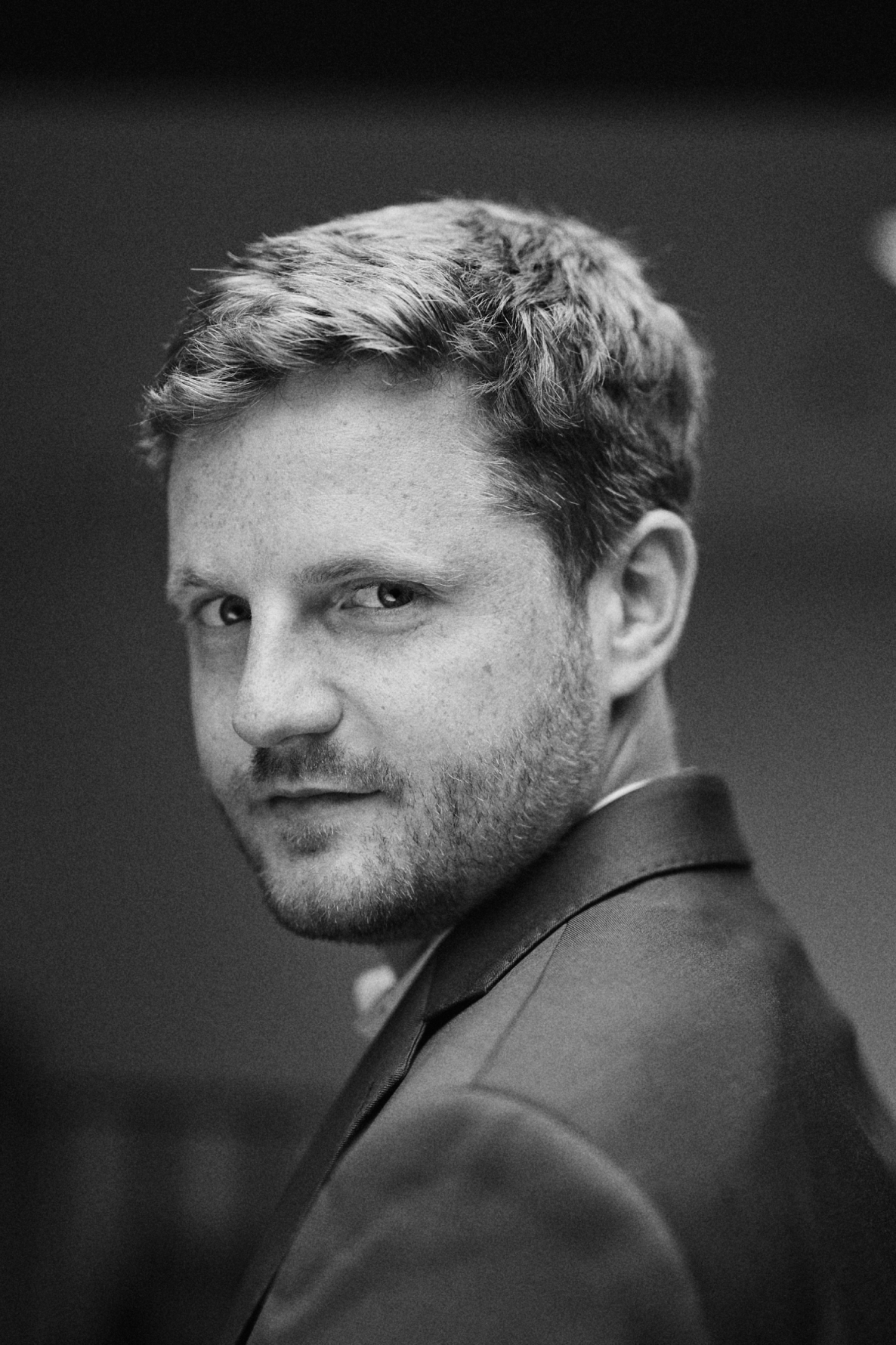
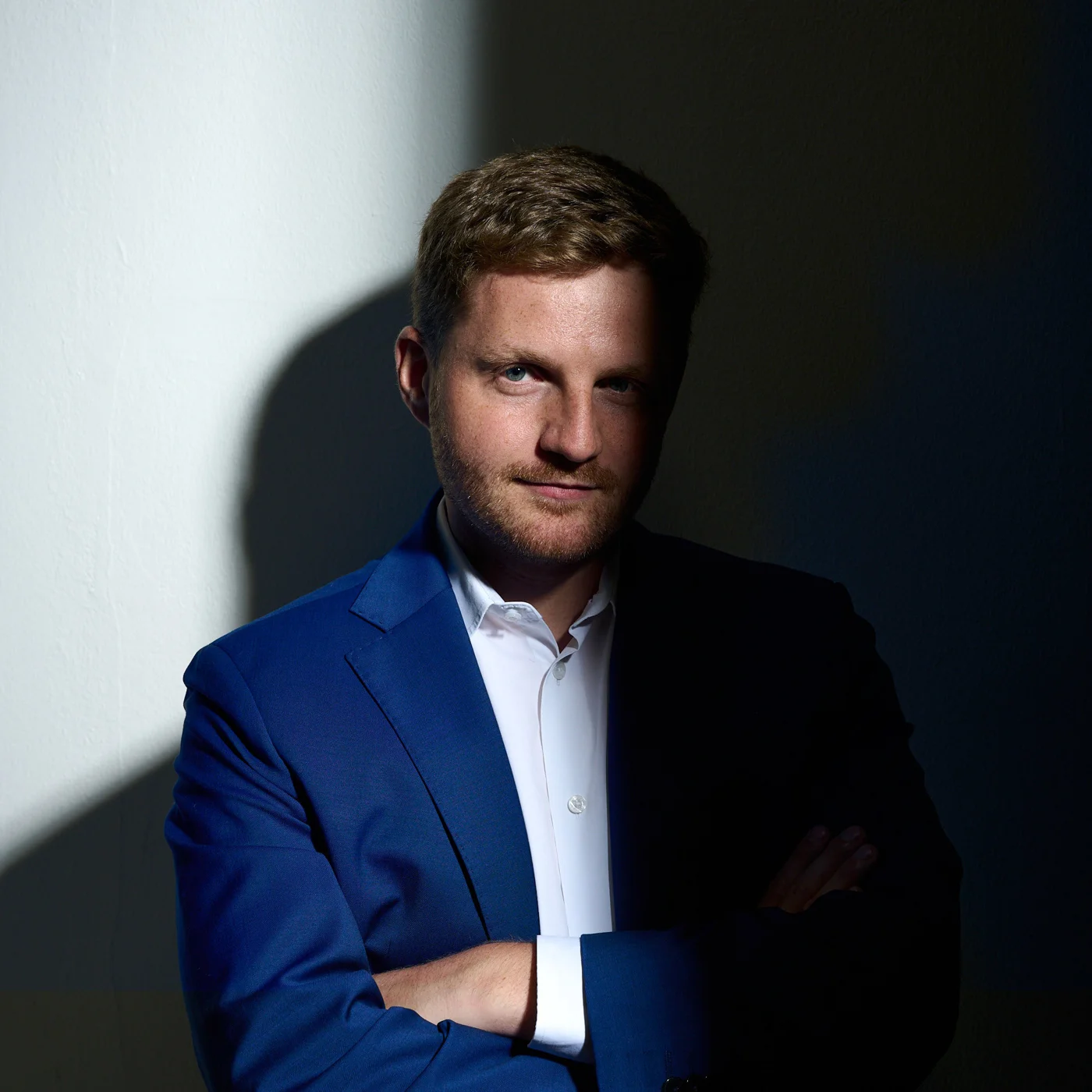
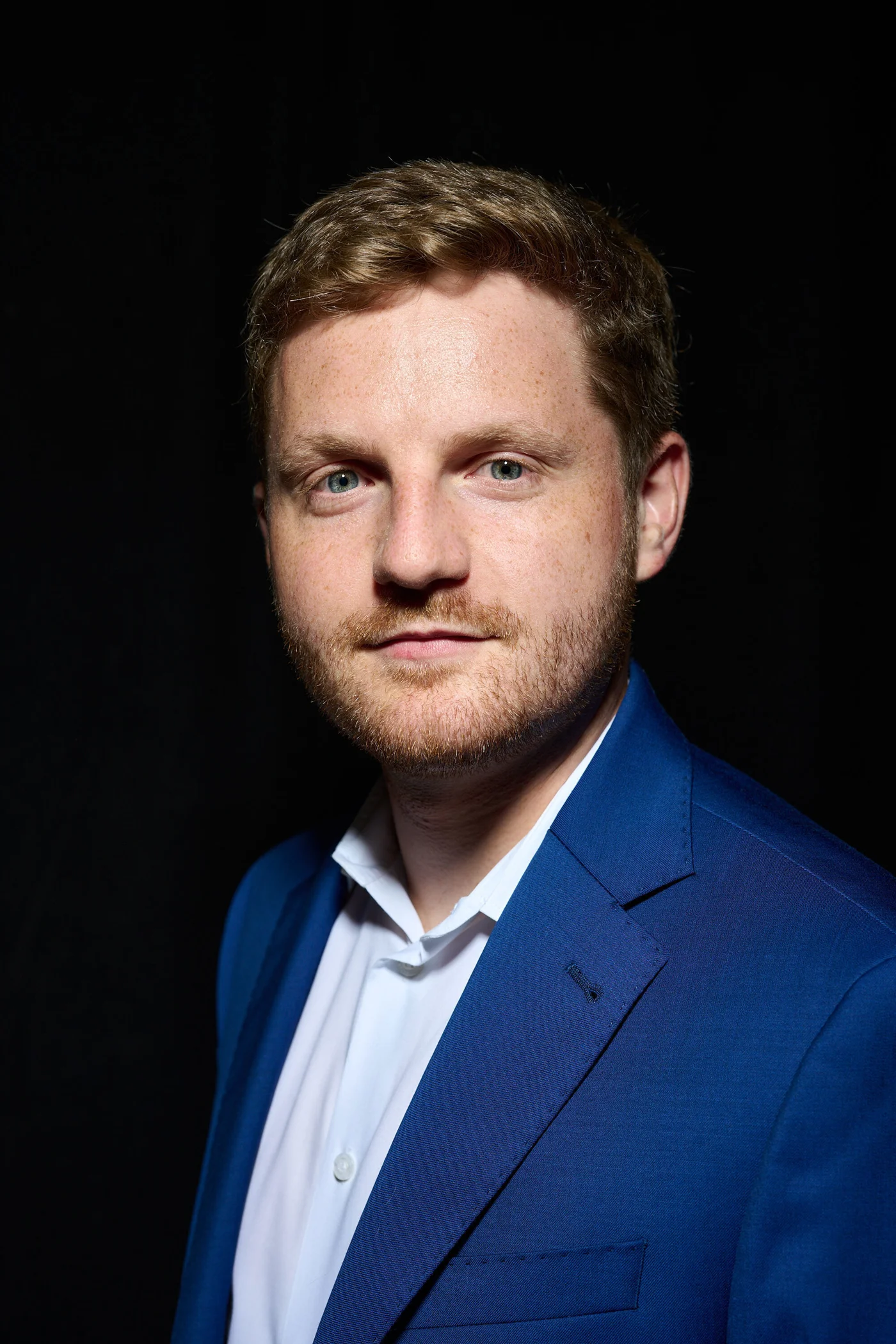
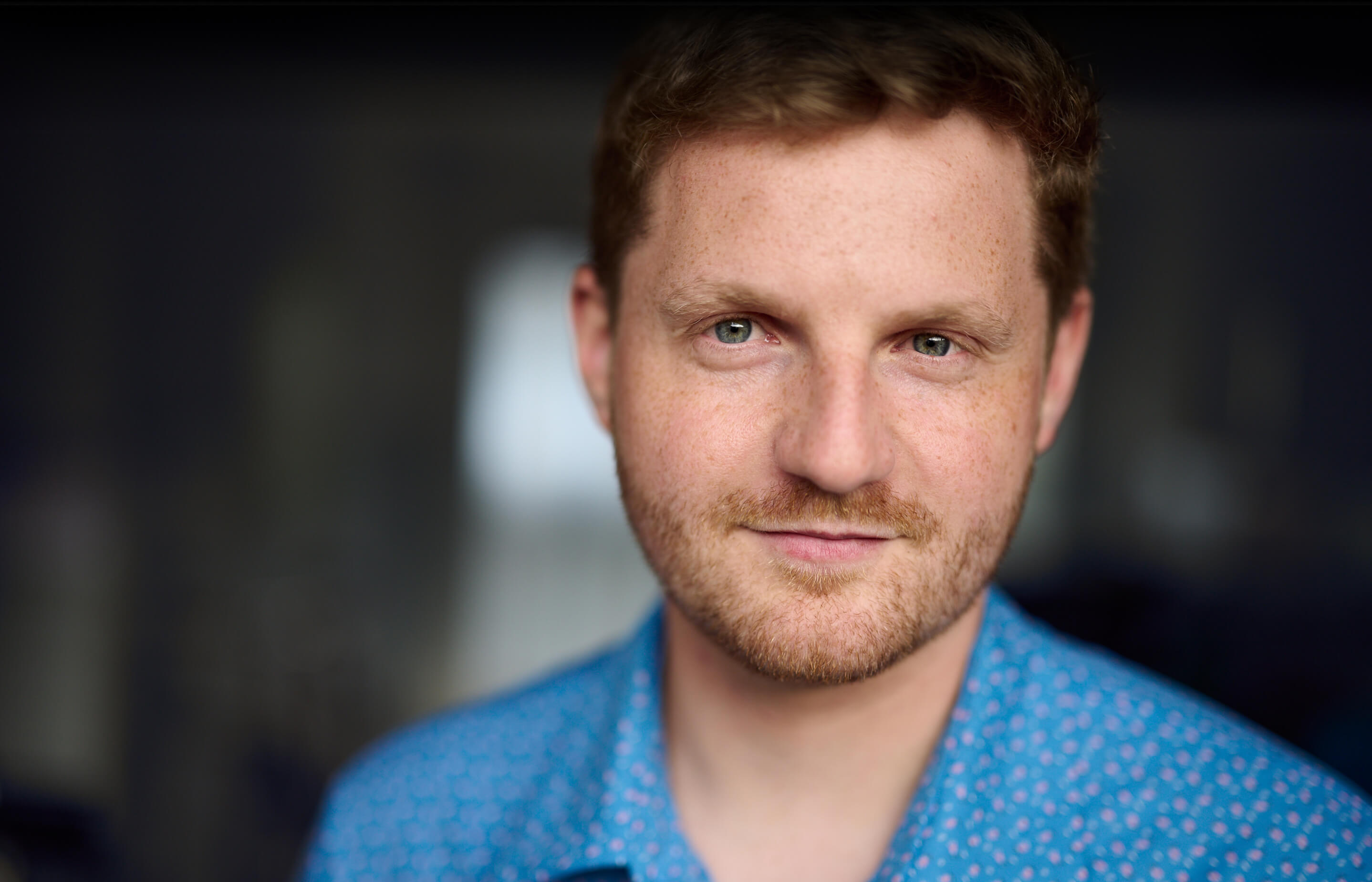
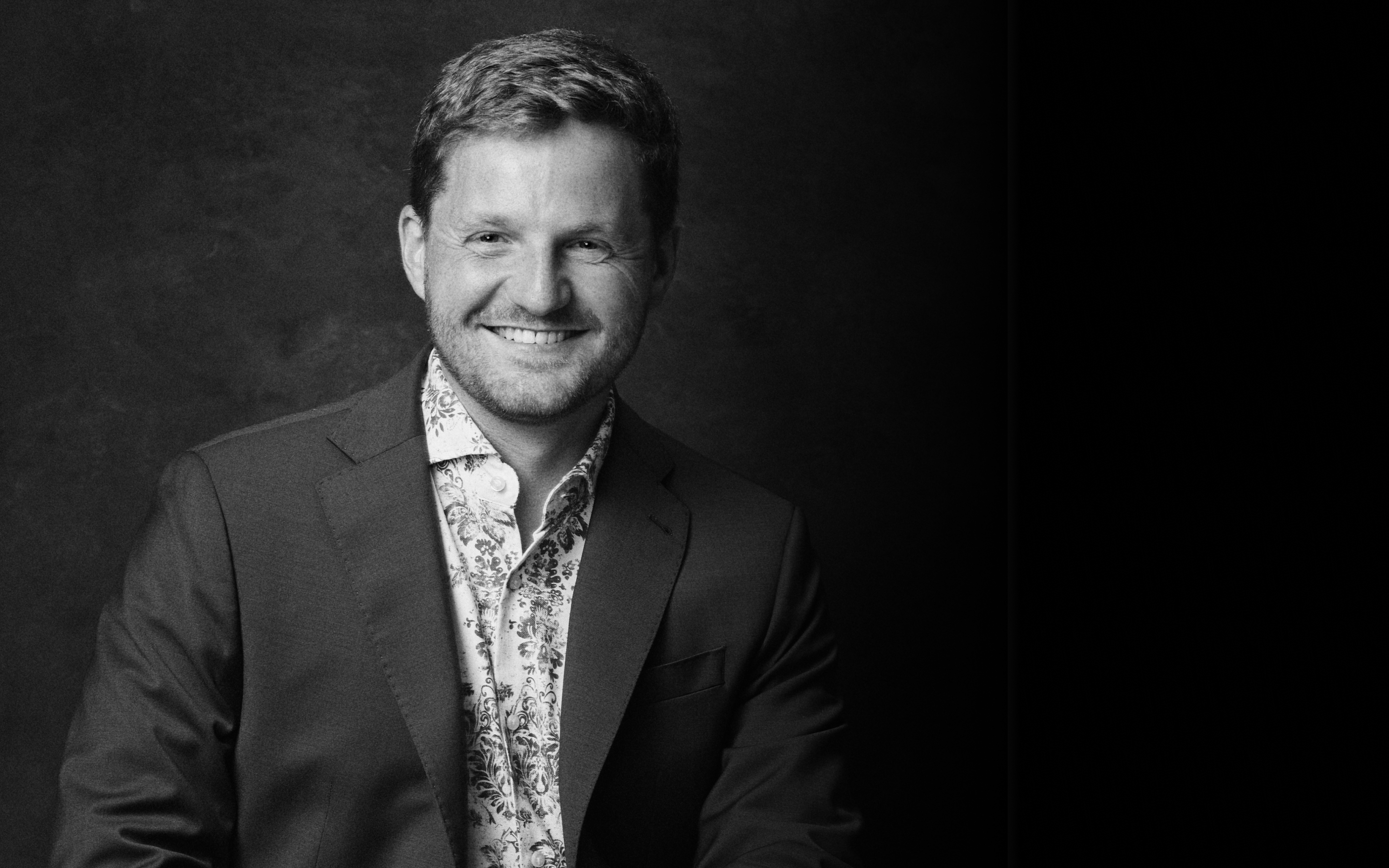
Julian Habermann wurde 1993 in Freising geboren und war Mitglied der Regensburger Domspatzen. Er studierte an der Hochschule fur Musik Würzburg bei Christian Elsner und an der Musikhochschule Frankfurt bei Hedwig Fassbender und Thilo Dahlmann. Seit 2021 arbeitet der Künstler mit Lioba Braun. Von 2019 - 2022 war Julian Habermann im Ensemble des Staatstheaters Wiesbaden und 2025 gastierte er am Mainfranken Theater Würzburg in Abrahams MÄRCHEN IM GRAND HÔTEL sowie als Andres in Alban Bergs WOZZECK.
Saison 26 /27 (Auswahl): Bachs JOHANNESPASSION in Frankfurt und mit dem Rias Kammerchor in Berlin, Bachs MARKUSPASSION in St. Michaelis Hamburg, Fanny Hensel - ORATORIUM NACH BILDERN DER BIBEL mit der Gaechinger Cantorey in Ludwigsburg und Stuttgart, Konzerte mit den Regensburger Domspatzen (mit Liveübertragung im BR) Haydens SCHÖPFUNG und BACHKANTATEN beim Oregon Bach Festival, Händels ALEXANDERFEST in Bad Harzburg, H-MOLL MESSE in Rott am Inn, Bachs MAGNIFICAT in der Tonhalle Zürich, WEIHNACHTS ORATORIUM in Wuppertal, Garmisch und Unterschleißheim, Konzerte mit der Gaechinger Cantorey in Ludwigsburg, Turin, Ferrara, Berlin und Freiburg sowie Bachs MATTHÄUS PASSION auf einer Asientournee und in Leipzig mit dem Thomanerchor Leipzig (mit Liveübertragung auf Arte)
Julian Habermann was born in Freising in 1993 and was a member of the Regensburger Domspatzen. He studied at the Hochschule für Musik Würzburg with Christian Elsner and at the Musikhochschule Frankfurt with Hedwig Fassbender and Thilo Dahlmann. The artist has been working with Lioba Braun since 2021.
During the 2024 / 25 season, Julian Habermann joined the Mainfranken Theatre Würzburg on a part-time contract. There, he took over the role of Albert in Paul Abraham's MÄRCHEN IM GRAND HÔTEL and the role of Andres in Alban Berg's WOZZECK.
Important engagements 25/26: J.S.Bach / Thomas Höft - QUEERPASSION in the Vienna Konzerthaus, in Leipzig and at the Vlaamse Opera Antwerpen, DAS VERWUNSCHENE GLÜCK, at the Styriarte Graz in Schloss Eggenberg, Haydn DIE SCHÖPFUNG in Wolfsburg, Mendelssohn LOBGESANG in Nuremberg St. Lorenz, LETZTE LIEDER at the Schauspielhaus Hamburg, Haydn DIE JAHRESZEITEN in Friedrichshafen, BACH JOHANNES PASSION with the Rias Kammerchor, BACH MARKUS PASSION in St. Michaelis, Hamburg, Fanny Hensel - ORATORIUM AFTER PICTURES FROM THE BIBLE with the International Bach Academy Stuttgart, concerts with Mendelssohn 115 PSALM and Carl Maria von Weber JUBELMESSE with the Regensburger Domspatzen (broadcast live on BR), DIE ZAUBERFLÖTE Tamino at the Styriarte in Graz.

About
Discography
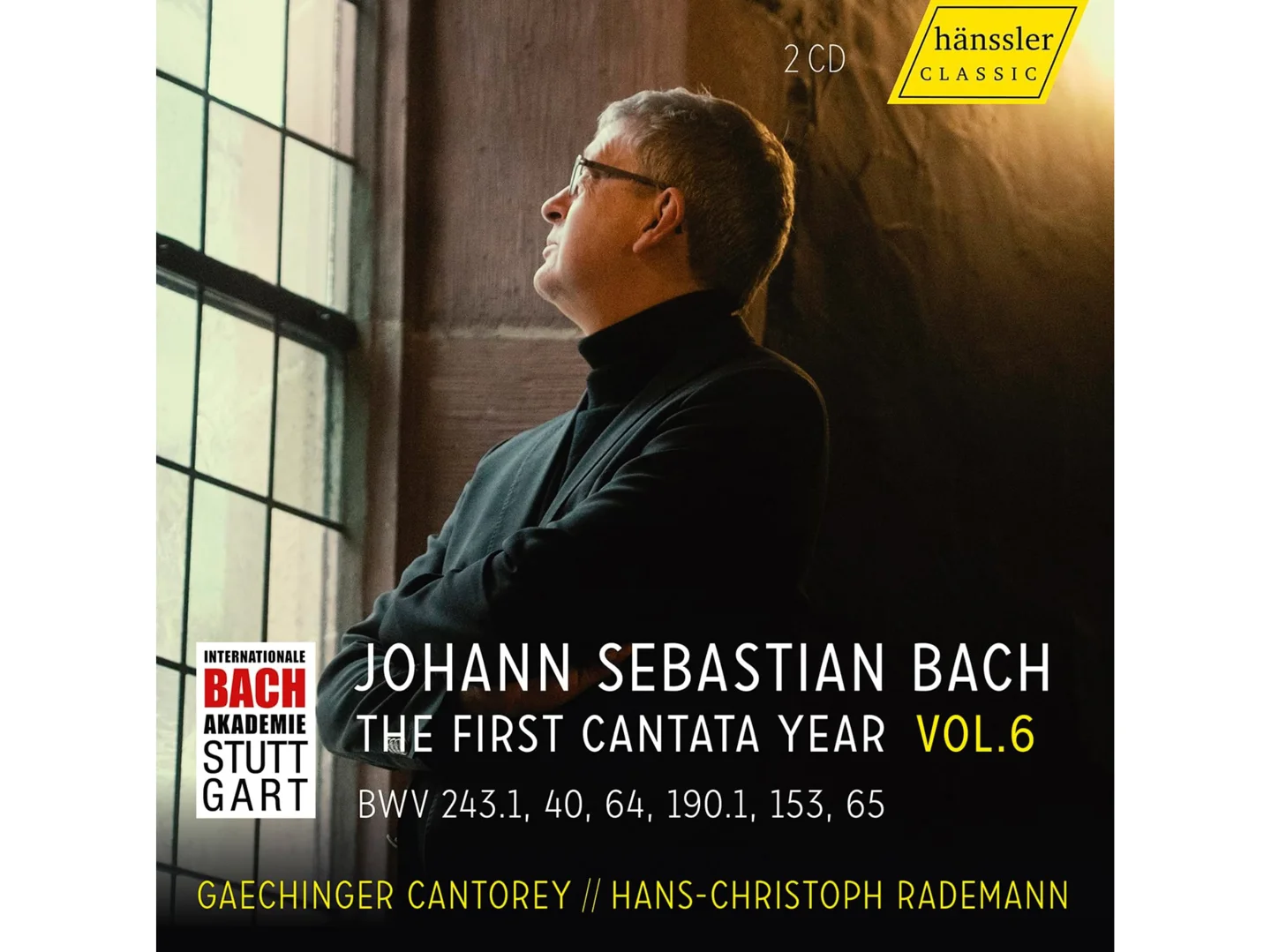
Vision Bach Vol.6 (Magnificat BWV 243.1)
In 2023, commemorating 300 years since Johann Sebastian Bach's arrival in Leipzig, the International Bach Academy Stuttgart embarked on an ambitious project to perform and record all of Bach's cantatas he composed in his first year there. This monumental task resulted in 23 concerts, meticulously captured and set to be released in a CD series by Hänssler Classic, guided by the latest insights in Bach research. Under Hans-Christoph Rademann's direction, the Gaechinger Cantorey's expert ensemble brought Bach's vision to life, blending historical authenticity with modern excellence. This series not only celebrates Bach's enduring legacy but also offers listeners a comprehensive journey through his early Leipzig cantatas, promising an immersive auditory experience of baroque mastery.
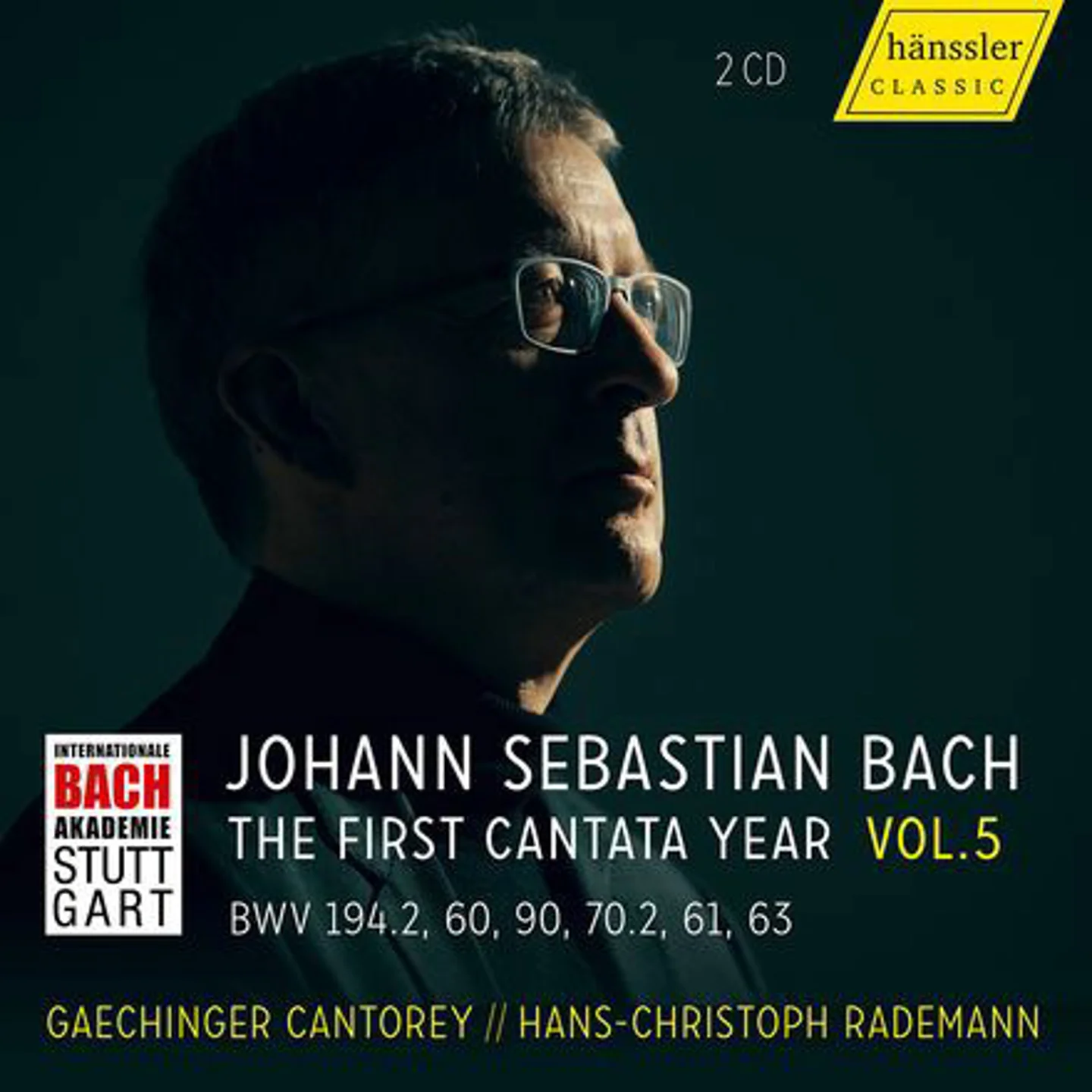
Vision Bach Vol.5
In 2023, commemorating 300 years since Johann Sebastian Bach's arrival in Leipzig, the International Bach Academy Stuttgart embarked on an ambitious project to perform and record all of Bach's cantatas he composed in his first year there. This monumental task resulted in 23 concerts, meticulously captured and set to be released in a CD series by Hänssler Classic, guided by the latest insights in Bach research. Under Hans-Christoph Rademann's direction, the Gaechinger Cantorey's expert ensemble brought Bach's vision to life, blending historical authenticity with modern excellence. This series not only celebrates Bach's enduring legacy but also offers listeners a comprehensive journey through his early Leipzig cantatas, promising an immersive auditory experience of baroque mastery.
Media
Contact
65187 Wiesbaden


Social